Reading the First Amendment as a Whole
The forty-five words of the First Amendment list six necessary ingredients for democratic self-government: the Establishment Clause (freedom from religion); the Free Exercise Clause (freedom of religion); the Free Speech Clause (freedom to speak your mind); the Free Press Clause (freedom to use technology to transmit speech to a larger audience); Freedom of Assembly (freedom to join with others to advance an idea); and the right to Petition Government for Redress of Grievances (freedom to present arguments to the government).
The careful order of the six ideas replicates the life-cycle of a democratic idea: born in a free mind protected by the two Religion Clauses (which are viewed today by the Supreme Court as protecting secular as well as religious conscience); communicated to the public by a free speaker; disseminated to a mass audience by a free press; collectively advanced by freely assembled persons; and presented to the government for adoption pursuant to petition. No other rights-bearing document in our history lists the foundational ideas of conscience, speech, press, assembly and petition in one place, much less in the careful order imposed by the Founders.
Instead of treating each of the First Amendment’s six clauses as protecting an essential ingredient of democratic life worthy of independent elaboration, the modern Supreme Court often concentrates solely on the ten words of the Free Speech Clause, demoting the Press, Assembly, and Petition Clauses to specialized forms of speech. The result is an underdeveloped Free Press Clause, an anemic Free Assembly Clause, and a Petition Clause on life-support.
Press
If the Free Press Clause were viewed, not merely as a colony of the Free Speech Clause, but as a freestanding grant of protection to the process of using technology to disseminate speech to a mass audience, the Supreme Court would be obliged to consider and define the role of a free press in a functioning democracy. At least three things might change. First, the Court might reconsider its refusal to grant members of the press increased access to places – like prisons – that are hidden from public view. Second, the Court might insulate the press from liability for merely transmitting someone else’s speech, just like the immunity enjoyed by the telephone company. Finally, the Court might re-consider its decision to treat huge corporate media empires as fully protected speakers, instead it might view them as technological conduits with a duty to provide access to weak voices as well as strong ones.
Assembly
Under current law, the Supreme Court treats exercises of freedom of assembly, like picketing and demonstrating, as free speech that is “brigaded” with action. Thus, while the Supreme Court recognizes the abstract First Amendment right of people to gather together on streets and in parks for meetings, speeches, parades, protest marches, picketing, and demonstrations, it also grants the police broad discretion to regulate public assemblies in the name of preserving public order. Sometimes, the regulations require groups to obtain a permit in advance. Supporters of permit laws argue that they are needed to give the authorities notice of the possible need for a police presence, or to assure that competing groups do not seek to occupy the same space at the same time, risking violence. Opponents fear that local authorities will abuse the permit process to prevent unpopular persons from acting collectively to support their point of view.
In an effort to minimize possible abuse, the Supreme Court bans permit laws that give local authorities too much discretion about whether to permit an assembly, and requires that valid permit laws be enforced with strict equality. Even if a permit is granted – or is not required – public assemblies remain subject to discretionary regulation by the police in order to minimize the risk of disorder, or interference with the rights of others. The Supreme Court has ruled that it is the job of the police to protect an assembly from a “heckler’s veto.” Where, however, hostile response threatens to spill over into violence, inevitable pressure exists to shut down the assembly. Pressure also exists to prevent assemblies from inconveniencing non-participants through noise and interference with free passage. Not surprisingly, despite the Court’s effort to limit police discretion by requiring equal enforcement of precise regulations, under existing law, free assembly often exists at the mercy of the police. Witness the fate of Occupy Wall Street—an anarchic exercise in Free Assembly that was initially tolerated, but rapidly suppressed when it threatened to inconvenience too many non-participants.
While the tension between free assembly and public order can never be eliminated, recognition that the First Amendment treats free assembly as a fundamental building block for a well-functioning democracy—and not merely as a disfavored form of free speech—might place greater restraints on the power of the police to regulate free assembly. Preserving a vigorous right to assemble freely is particularly important, since marches, picketing and demonstrations provide poor, less well-educated segments of the society with a potent and inexpensive method of expression that does not require verbal sophistication.
Petition
Under existing law, the Petition for Redress of Grievances Clause is a dead letter. While the Supreme Court has ruled that the Petition Clause adds nothing to a free speech claim, the Founders must have believed that the right to Petition was not the same thing as the right to speak. That’s why they put the two ideas in separate clauses.
How might we resuscitate the Petition Clause in the 21st century United States? We might re-invent the Petition Clause as an anti-gridlock device to force the legislature to consider issues that, according to the petitioner, are being swept under the rug. We might require an answer to a formal petition. We might even require a formal vote. In a political system where legislators risk being insulated from their constituents, petitions might trigger the dialogue that knits them closer together. Finally, the Petition Clause may have untapped potential. In 1958, the Supreme Court expanded the literal text of the Free Assembly Clause to protect an analogous but extra-textual Freedom of Association. Most observers applaud this expansion of the Assembly Clause to cover more modern forms of democratic collective action. A similar potential for expansion by analogy exists in the Petition Clause. As we have seen, the six clauses of the First Amendment track the operation of democracy, culminating in the citizen’s formal interaction with the government under the Petition Clause. Until now, the idea of Petition has been limited to presenting written arguments to the government. What if petition were expanded to include the ultimate petition to redress grievance – voting – as assembly was expanded to include association? Maybe that’s where the elusive constitutional right to vote is hiding in plain sight, just waiting to be discovered?
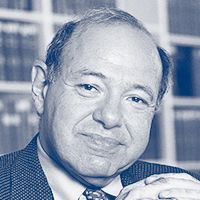
by Burt Neuborne
Norman Dorsen Professor of Civil Liberties and founding Legal Director of the Brennan Center for Justice at New York University Law School


Comments
Post a Comment