Free Exercise: A Vital Protection for Diversity and Freedom
One of this nation’s deepest commitments is to the full, equal, and free exercise of religion – a right that protects not only believers, but unbelievers as well. The government cannot use its authority to forbid Americans to conduct their lives in accordance with their religious beliefs or to require them to engage in actions contrary to religious conscience – even when the vast majority of their countrymen regard those beliefs as backward, mistaken, or even immoral.
Unfortunately, in the last few years – and especially since the Supreme Court’s decision requiring states to recognize same-sex marriage – this consensus in favor of tolerance has been slipping. All too often, we hear demands that religious people and religious institutions such as colleges or adoption agencies must join the state in recognizing same-sex marriages (or performing abortions or supplying contraceptives, or whatever the issues happen to be), or lose their right to operate. For the most part, the courts have rejected these arguments, and enforced the Free Exercise Clause even in these highly controversial areas.
When this country severed its ties with the British Empire, one thing that went with it was the established church. To an unprecedented degree, the young United States not only tolerated but actively welcomed people of all faiths. For example, despite his annoyance with the Quakers for their refusal to support the revolutionary war effort, Washington wrote to a Quaker Society to express his “wish and desire, that the laws may always be as extensively accommodated to them, as a due regard for the protection and essential interests of the nation may justify and permit.” Letter to the Annual Meeting of Quakers (1789).
What would it mean to have a regime of free exercise of religion? No one knew; there had been no such thing before. It quickly became clear that it was not enough just to cease persecution or discrimination against religious minorities. Just two years after the ink was dry on the First Amendment, the leader of the Jewish community in Philadelphia went to court and asked, under authority of his state’s free exercise clause, to be excused from complying with a subpoena to appear in court on his day of sabbath. He did not ask that the state cease to do official business on Saturday, but he did ask the court to make an exception – an accommodation – that would enable him to be faithful to the Jewish law.
This would become the central interpretive question under the Free Exercise Clause: Does it give Americans whose religions conflict with government practices the right to ask for special accommodation, assuming an accommodation can be made without great harm to the public interest or the rights of others?
In the early years, some religious claimants won and some lost. The Mormon (LDS) Church lost in a big way, in the first such case to reach the United States Supreme Court. Reynolds v. United States (1878). In Reynolds, the Court unanimously upheld a federal law criminalizing the LDS practice of plural marriage, on the ground that the Free Exercise Clause protects “belief” but not “conduct.” The Court did not explain how it squared this interpretation with the text of the Clause, which expressly reaches religious “exercise.” This rather obvious misinterpretation of the Clause persisted until the 1960s, but has been repeatedly repudiated by the modern Court, even by Justices who adhere to a narrow view of the reach of free exercise.
In 1963, the Supreme Court held that the Free Exercise Clause of the First Amendment does require the government to make accommodations for religious exercise, subject as always to limitations based on the public interest and the rights of others. Sherbert v. Verner (1963). In 1990, the Court shifted to the opposite view, in a case involving the sacramental use of peyote by members of the Native American Church. Employment Division v. Smith (1990).
Today we have a patchwork of rules. When the federal government is involved, legislation called the Religious Freedom Restoration Act grants us the right to seek appropriate accommodation when our religious practices conflict with government policy. About half the states have similar rules, and a second federal law protects believers in the contexts of land use (mainly zoning) and institutionalized persons. An example of the latter is the Muslim prisoner who recently won the right to wear a half-inch beard in accordance with Islamic law, by a 9-0 vote in the Supreme Court. Holt v. Hobbs (2015).
Moreover, the Free Exercise Clause itself has been interpreted more broadly, as extending not only to laws that explicitly target religion as such, but to laws that exempt comparable secular activities while still being enforced against religious acts. In one early case, the Court unanimously invalidated a city ordinance that outlawed the killing of animals in a religious ritual while allowing the killing of animals for a vast range of secular reasons, including sport. More recently, during the Covid pandemic, the Court initially okayed laws forbidding in-person worship service, but later (and Justice Amy Coney Barrett replaced Justice Stephen Breyer on the Court) intervened when worship services were forbidden or strictly limited while secular activities like gambling casinos, bike shops, and liquor stores operated more freely. The Court now applies what is called “most favored nation” status to religious exercise, holding that when the government allows secular activities it may not prohibit comparable religious activities without a compelling basis in the public interest.
In addition, the Court has held that a combination of the Free Exercise and Establishment Clauses absolutely protects the right of religious entities to select their own ministers, even overriding antidiscrimination laws. This right has been extended beyond ordained clergy to all religious functionaries who engage in the teaching of religious doctrine or the conduct of religious worship, including at least some teachers in religious schools.
The range of claims has been as diverse as the religious demography of the country. A small Brazilian sect won the right to use a hallucinogenic drug in worship ceremonies; Amish farmers have won exceptions from traffic rules; Muslim police have been permitted to wear beards; Orthodox Jewish boys won the right to wear their skullcaps when playing high school basketball; a Jehovah’s Witness won the right to unemployment compensation after he quit rather than working to produce tank turrets; a Mormon acting student won the right to refuse roles involving nudity or profanity; a prisoner facing execution was allowed to have the clergy of his choice attend him for prayer; and in the most controversial recent case, a family-owned business with religious objections to paying for abortion-inducing drugs persuaded the Supreme Court that the government should make those contraceptives available without forcing them to be involved.
In all these cases, courts or agencies came to the conclusion that religious exercise could be accommodated with little or no harm to the public interest or to others. As Justice Sandra Day O’Connor (joined by liberal lions Brennan, Marshall, and Blackmun) wrote: “courts have been quite capable of applying our free exercise jurisprudence to strike sensible balances between religious liberty and competing state interests.” Employment Division v. Smith (1989) (concurring opinion).
Finally, the equal treatment principle has been extended to the area of government funding. Prior to 2002, the Court generally held that it would violate the Establishment Clause for government financial support to be used for religious purposes, even on a neutral basis. This led to dozens of cases in which religious schools and other social welfare entities were cut off from funds provides to other private school and entities. Starting in 2002, in Zelman v. Simmons-Harris, the Court abandoned this approach, and now hold that is is unconstitutional for federal or state governments to exclude religious entities, on the basis of their religious status, from aid programs to which they would otherwise be eligible.
At a time when the Supreme Court’s same-sex marriage decision has allowed many millions of Americans to live their lives in accordance with their own identity, it would be tragic if we turned our backs on the right to live in accordance with our religious conviction, which is also part of who we are. A robust protection for free exercise of religion is not only part of the American tradition, it is vital to our protection for diversity and freedom.
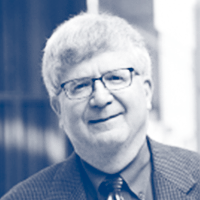
by Michael McConnell
Richard and Frances Mallery Professor and Director of the Constitutional Law Center at Stanford Law School; Senior Fellow at the Hoover Institution


Comments
Post a Comment