Fixing Free Speech
Three issues involving the freedom of speech are most pressing for the future.
Money, Politics, and the First Amendment
The first pressing issue concerns the regulation of money in the political process. Put simply, the question is this: To what extent, and in what circumstances, can the government constitutionally restrict political expenditures and contributions in order to “improve” the democratic process?
In its initial encounters with this question, the Supreme Court held that political expenditures and contributions are “speech” within the meaning of the First Amendment because they are intended to facilitate political expression by political candidates and others. The Court also recognized, however, that political expenditures and contributions could be regulated consistent with the First Amendment if the government could demonstrate a sufficiently important justification. In Buckley v. Valeo (1976), for example, the Court held that the government could constitutionally limit the amount that individuals could contribute to political candidates in order to reduce the risk of undue influence, and in McConnell v. Federal Election Commission (2003), the Court held that the government could constitutionally limit the amount that corporations could spend in the political process in order to influence electoral outcomes.
In more recent cases, though, in a series of five-to-four decisions, the Supreme Court has overruled McConnell and held unconstitutional most governmental efforts to regulate political expenditures and contributions. Citizens United v. Federal Election Commission (2010); McCutcheon v. Federal Election Commission (2014). As a result of these more recent decisions, almost all government efforts to limit the impact of money in the political process have been held unconstitutional, with the consequence that corporations and wealthy individuals now have an enormous impact on American politics.
Those who object to these decisions maintain that regulations of political expenditures and contributions are content-neutral restrictions of speech that should be upheld as long as the government has a sufficiently important justification. They argue that the need to prevent what they see as the corruption and distortion of American politics caused by the excessive influence of a handful of very wealthy individuals and corporations is a sufficiently important government interest to justify limits on the amount that those individuals and corporations should be permitted to spend in the electoral process.
Because these recent cases have all been five-to-four decisions, it remains to be seen whether a differently constituted set of justices in the future will adhere to the current approach, or whether they will ultimately overrule or at least narrowly construe those decisions. In many ways, this is the most fundamental First Amendment question that will confront the Supreme Court and the nation in the years to come.
The Meaning of “Low” Value Speech
The second pressing free speech issue concerns the scope of “low” value speech. In recent years, the Supreme Court has taken a narrow view of the low value concept, suggesting that, in order for a category of speech to fall within that concept, there has to have been a long history of government regulation of the category in question. This is true, for example, of such low value categories as defamation, obscenity, and threats. An important question for the future is whether the Court will adhere to this approach.
The primary justification for the Court’s insistence on a history of regulation is that this limits the discretion of the justices to pick-and-choose which categories of expression should be deemed to have only low First Amendment value. A secondary justification for the Court’s approach is that a history of regulation of a category of expression provides some basis in experience for evaluating the possible effects – and dangers – of declaring a new category of speech to have only low First Amendment value.
Why does this doctrine matter? To cite one illustration, under the Court’s current approach, so-called “hate speech” – speech that expressly denigrates individuals on the basis of such characteristics as race, religion, gender, national origin, and sexual orientation – does not constitute low value speech because it has not historically been subject to regulation. As a result, except in truly extraordinary circumstances, such expression cannot be regulated consistent with the First Amendment. Almost every other nation allows such expression to be regulated and, indeed, prohibited, on the theory that it does not further the values of free expression and is incompatible with other fundamental values of society.
Similarly, under the Court’s approach to low value speech it is unclear whether civil or criminal actions for “invasion of privacy” can be reconciled with the First Amendment. For example, can an individual be punished for distributing on the Internet “private” information about other persons without their consent? Suppose, for example, an individual posts naked photos of a former lover on the Internet. Is that speech protected by the First Amendment, or can it be restricted as a form of “low” value speech? This remains an unresolved question.
Leaks of Classified Information
The Supreme Court has held that the government cannot constitutionally prohibit the publication of classified information unless it can demonstrate that the publication or distribution of that information will cause a clear and present danger of grave harm to the national security. New York Times v. United States (The “Pentagon Papers” case) (1971). At the same time, though, the Court has held that government employees who gain access to such classified information can be restricted in their unauthorized disclosure of that information. Snepp v. United States (1980). It remains an open question, however, whether a government employee who leaks information that discloses an unconstitutional, unlawful, or unwise classified program can be punished for doing so. This issue has been raised by a number of recent incidents, including the case of Edward Snowden. At some point in the future, the Court will have to decide whether and to what extent the actions of government leakers like Edward Snowden are protected by the First Amendment.
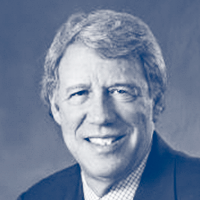
by Geoffrey R. Stone
Edward H. Levi Distinguished Service Professor of Law at the University of Chicago Law School


Comments
Post a Comment